LLM Integration

Role
UX Research, UI Design
End Users
Experimental Biologists, Bioinformaticians, Clinicians, Educators & Students
Project Duration
2023
Intelligent, context-aware AI exploration
The HuBMAP Data Portal serves a wide range of biological researchers—from experimental biologists to bioinformaticians to clinicians—each with different levels of computational expertise and distinct workflows. Yet both groups share two core challenges:
Navigation: “Where do I go to find the right data or answer my research question?”
Understanding: “What is this data telling me in the context of biology?”
To address these gaps, I explored three LLM-enabled experiences that would lower the barrier to insight and make HuBMAP more accessible, intuitive, and context-aware.
Target Users & Pain Points
Experimental Biologist
Expertise in human biology, not computational tools
Navigational Pain Points:
“Where do I ask my research question?”
“What page actually helps me understand cell distribution, markers, or tissue context?”
Understanding pain points:
Interpreting data outputs
Understanding what analysis results mean biologically
Computational Biologist
Has computational skills in Python/R/Matlab to analyze biological data.
Navigational Pain Points:
Finding datasets with the right modalities
Knowing whether files are complete or suitable for download
Understanding pain points:
Biological context behind datasets
Understanding data quality / tissue annotation nuances
3 LLM Applications
(1) GPT Interactive Assistant (Conversational Navigation)

How it works:
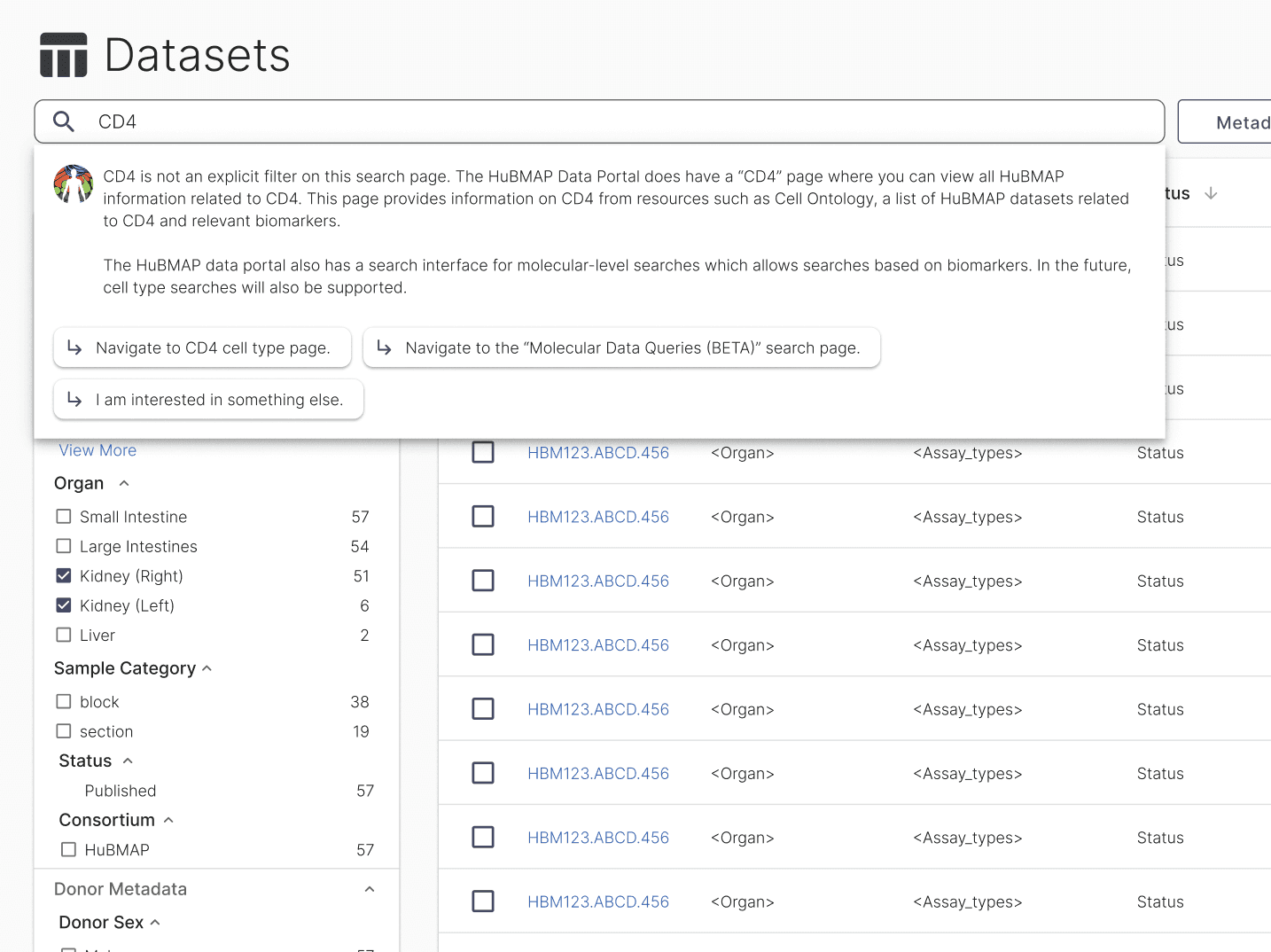
Interprets open-ended biological queries and translates them into actionable searches
Directs users to the most relevant datasets, organs, tools, or pages
Provides contextual summaries and explanations without requiring menu-based navigation
(2) Generative Search AI

Problem:
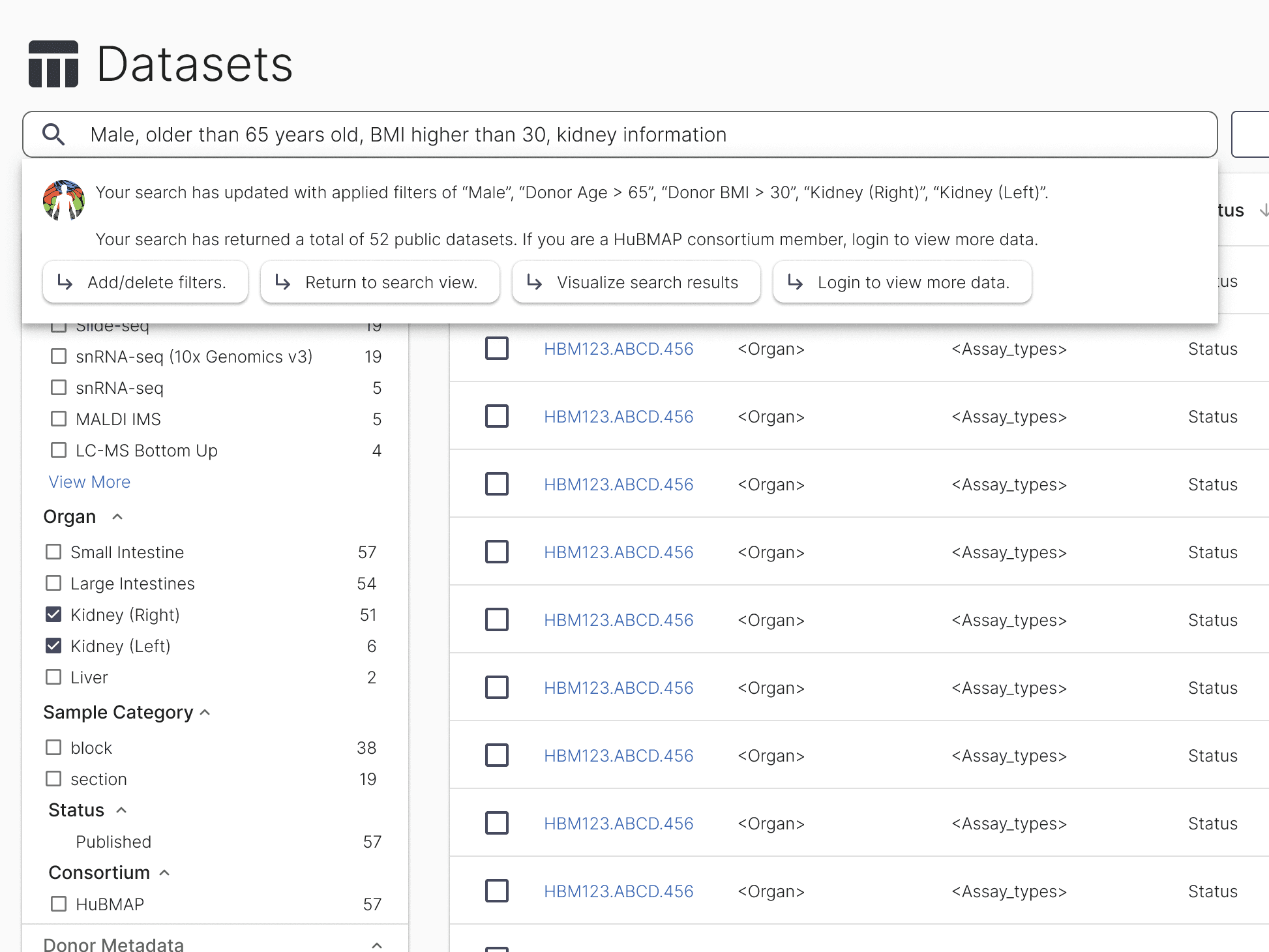
The existing search was exact-match and dependent on metadata filtering.
Solution:
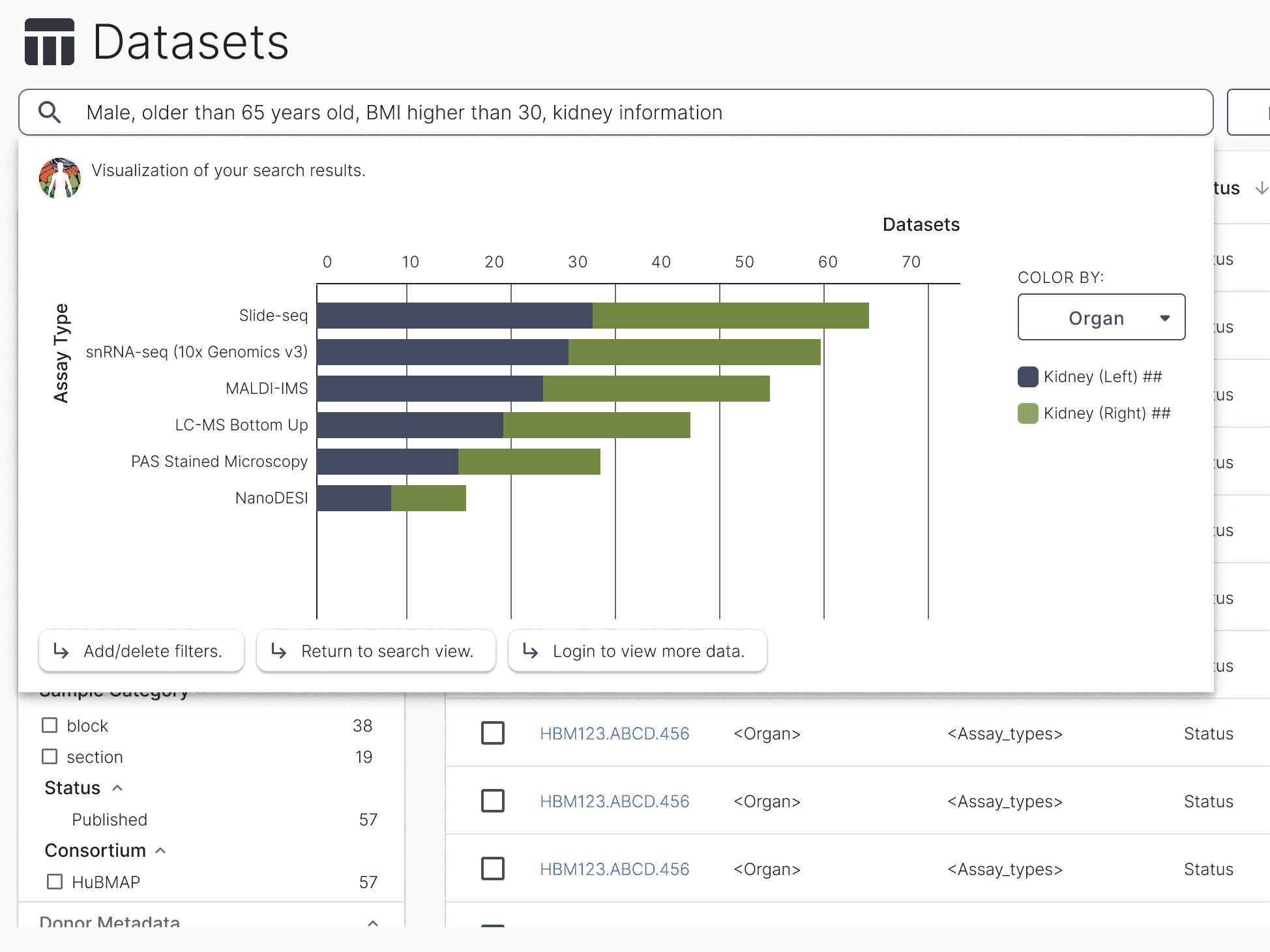
Generative Search AI enables semantic, biological, and goal-oriented search by interpreting natural-language queries and converting them into structured filters. It can also automatically generate visual summaries, such as assay distributions or organ-level comparisons based on the user’s query, helping researchers understand results at a glance.
(3) AI Tooltips (Inline Context + Biological Definitions)
AI tooltips provide on-demand explanations for complex scientific terms, improving interpretability and reducing cognitive load while users explore datasets.
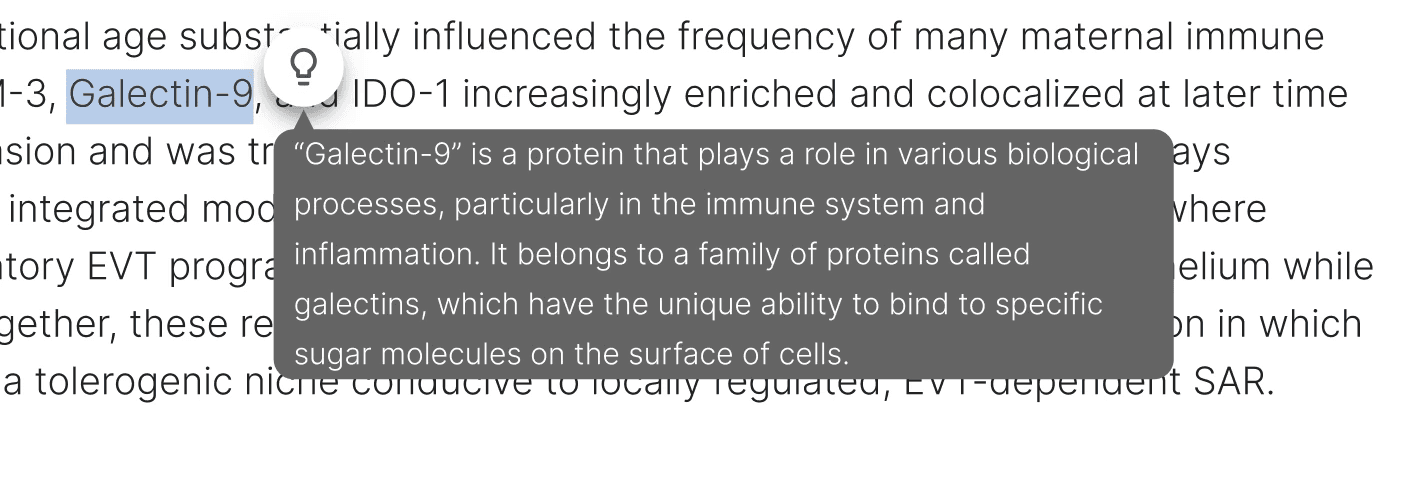
How it Works:
When a user hovers over a complex term (e.g., snRNA-seq, CD markers), AI generates:
A concise definition
Relevant biological or tissue context
Why it is useful:
Helps experimental biologists understand file structures, assay names, and modality-specific language.
Helps computational researchers interpret domain-specific biological terminology.
Impact
Presented the AI proposal to stakeholders, establishing a clear design direction for LLM features in the portal
Provided a unified UX vision that aligned engineering, product, and scientific teams
Opened opportunities for future intelligent analysis features within HuBMAP’s in-browser data analysis environment
Delivered Feature
Delivered a natural-language mode that lets researchers explore metadata and generate visualizations from just a chat.
Beta release allows free token allowance to authorized users, or users can use an OpenAI API key to explore the feature without login.